




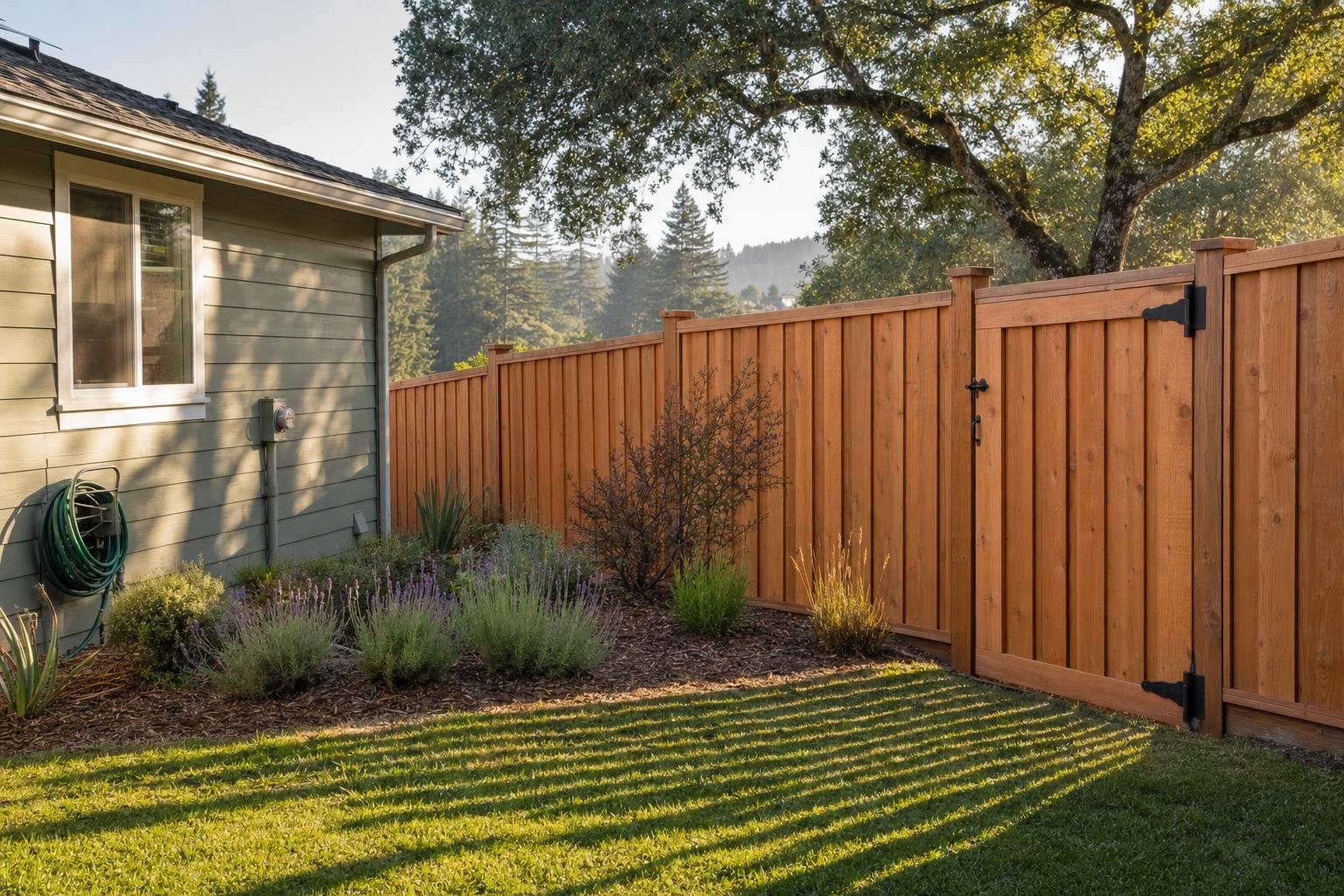
When we tear out an old wood fence in Santa Cruz County, the posts are usually what gave up, rotted through a few inches below the dirt while the boards still looked decent. Here's how we build a wood fence to last in our fog and clay, and the county height rules to check before anyone digs a hole.
Why wood fences fail early here
Our weather is hard on wood. Along the coast and up in the redwoods, fog keeps fences damp for months at a time. In winter the rain soaks into clay soil around Scotts Valley, Corralitos, and the hills behind Aptos and stays there. A post set in wet clay sits in water half the year.
The rot almost always starts right at the ground line, where soil, air, and moisture meet. Sprinklers that hit the fence every morning make it worse. So does mulch or soil piled up against the boards. We see a lot of fences where the pickets are fine and the whole run is leaning because three posts snapped at grade during a windy storm.
Picking the wood
Redwood is what most fences around here are built from. It grows in this part of the state, handles our damp weather better than most species, and weathers to a soft gray if you leave it alone. But the grade you buy matters a lot.
Redwood fencing comes in heartwood and sapwood grades. Big Creek Lumber's redwood fencing page lays it out well. Construction Heart is all heartwood, the dark inner part of the tree that holds up to moisture. Construction Common allows sapwood, the lighter outer wood, which breaks down much faster in contact with wet ground.
How we usually spec it:
- Posts: heartwood redwood or pressure-treated posts rated for ground contact. Never sapwood in the ground.
- Bottom board (kickboard): heartwood or treated, since it lives closest to the dirt.
- Pickets and rails: Construction Common is fine up off the ground on most fences, especially on a budget.
Cedar is an option too, and it looks great new. In our fog belt we've had better luck with redwood heartwood, and it's easier to match a fence that already exists in the neighborhood.
How we set posts so they last
Most of a fence's life comes down to the posts. On every job we:
- Set most six foot fence posts at least two feet deep, deeper in loose sand near the beach or on a windy ridge.
- Put a few inches of drain rock at the bottom of the hole, which lets water drain away from the end of the post instead of pooling under it.
- Crown the top of any concrete footing so water runs off instead of collecting against the wood.
- Stop the pickets an inch or two above grade and let a replaceable kickboard take the hit instead.
On long runs in windy spots, we sometimes set galvanized steel posts and hang wood boards on them, so you still get a wood fence but nothing at grade to rot and snap.
Slopes need some thought too. On a hillside lot you can step the fence in level sections or rack it to follow the grade. Stepping looks tidy but leaves triangle gaps at the bottom that dogs and deer find right away. If deer are the reason you're building, our post on deer resistant landscaping in the Santa Cruz Mountains covers the height you need on a slope.
Check the height rules before you build
Most people assume a fence needs no paperwork. In the unincorporated county, that's partly true. The county's When is a Building Permit NOT Required page exempts wood and metal fences up to 8 feet from a building permit. Zoning height limits still apply, and those are what catch people.
The county's Fences and Walls guide sets the basics:
- Front yard setback: 3 feet tall, unless you get an over-height fence certification.
- Side and rear yards next to a street: 6 feet.
- Side and rear yards not next to a street: 8 feet.
- Corners and driveways: inside the sight clearance triangle near a street corner or driveway, 3 feet, so drivers can see.
Going taller than those numbers in the front yard or near a street means a permit. The county's Fence and Retaining Wall Permits page has the over-height checklist. If the fence will sit on top of a retaining wall, ask the county how they'll measure the height before you build either one. Inside city limits in Santa Cruz, Capitola, Scotts Valley, or Watsonville, the city's planning department has its own rules, so call them first.
Talk to your neighbor first
A lot of fences we build sit right on the property line. Before we set anything, we ask the homeowner to talk to the neighbor about where the line is, which side faces whom, and what style they'd both be happy looking at. A good neighbor fence, with the same finished look on both sides, often settles that question. If nobody's sure where the line is, getting a survey first beats moving a fence later.
Why late fall and winter work well
Fall and winter are good months to build a fence here. After the first rains the clay softens up and digging goes faster, and with the beds along the fence line mostly dormant there's less to trample. We plan around the big storm days and let concrete footings set up before we hang boards, and the fence is done before spring, when people want to be out in the yard.
Frequently Asked Questions
How long does a wood fence last in Santa Cruz?
It depends mostly on the posts. A redwood heartwood fence with posts set on gravel and boards kept off the dirt will last many years longer than the same fence with sapwood posts packed in clay.
Do I need a permit for a 6 foot fence in Santa Cruz County?
In the unincorporated county, a 6 foot wood fence in a side or rear yard usually needs no building permit. In the front yard setback the limit is 3 feet without an over-height certification, so check the county's fence rules first.
Should I stain or seal a new redwood fence?
It's your call. Left alone, redwood weathers to gray and still holds up. A penetrating sealer keeps the red color longer and slows checking, but it needs to be redone every few years.
Can you replace just the posts on an old fence?
Sometimes. If the boards and rails are still solid, we can set new posts and reattach the old panels. If the boards are brittle or split, a full rebuild usually makes more sense.
Get a Free Estimate
We've been building fences and landscapes across Santa Cruz County for over 40 years, from beach cottages in Live Oak to hillside lots in Boulder Creek. Take a look at our fences page for the styles we install, then call us at 831.254.3447 or reach out through our contact page for a free estimate.