




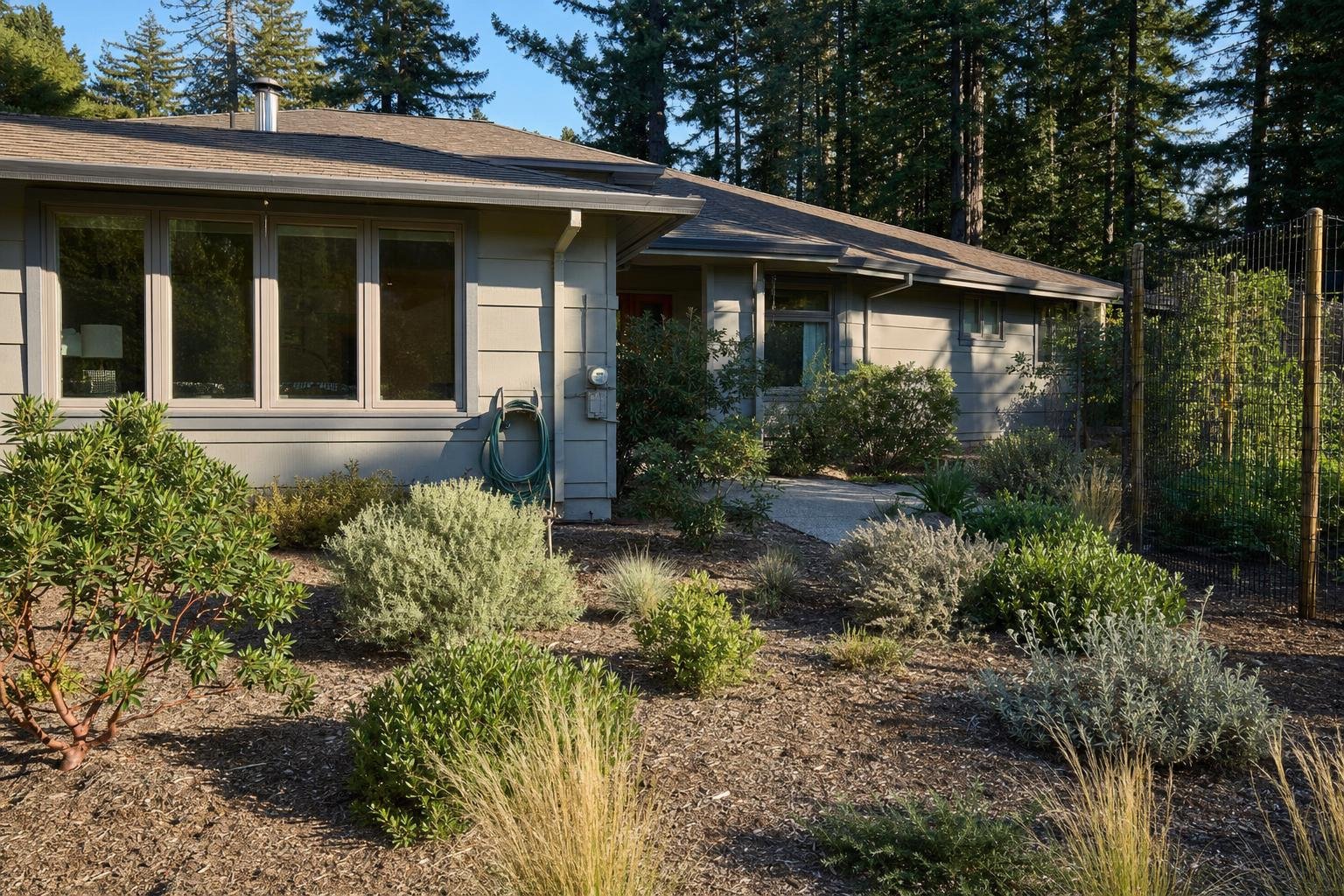
If you garden in Boulder Creek, Ben Lomond, Felton, or up the Scotts Valley hills, you already know the drill. You plant something, it looks good for a week, and one morning it is chewed to sticks. After 40 years of planting in these mountains, here is what actually survives and what we tell people before they spend money on plants.
Deer resistant does not mean deer proof
This is the part most plant lists skip. There is no such thing as a deer proof plant. The University of California's Pest Notes on deer puts it plainly: when food gets scarce, particularly in drought years, or when the herd is large, plants deer normally ignore get eaten anyway. The California Native Plant Society says the same thing in its guide to deer resistant natives, noting that resistance depends on the season, on what else is growing nearby, and on the habits of your particular deer.
That matters for how you budget your risk. A deer resistant plant list lowers the odds of losing a plant. It does not eliminate them. By late August around here, when the hillsides have gone dry and brown, we see deer eat things they walked past all spring.
What our deer usually leave alone
The deer in the Santa Cruz Mountains are Columbian black-tailed deer, and they browse by smell and texture more than anything. Four categories hold up well:
- Aromatic and resinous leaves. Sages are the workhorse here. Cleveland sage and hummingbird sage both do well, and hummingbird sage takes the shade under an oak, which is hard to plant.
- Tough, leathery, or waxy foliage. Manzanita and the shrubby ceanothus varieties. The smaller-leaved ceanothus groundcovers get browsed less than the big glossy-leaved kinds.
- Fuzzy or hairy leaves. Yarrow, California fuchsia, artemisia, most of the buckwheats.
- Spiny or thorny. Fuchsia-flowered gooseberry and California barberry both earn their spot on a hard site.
Deer grass, native bunchgrasses, and Pacific Coast iris also come through most years intact. Many of these are the same plants we recommend for water use, which we covered in our drought tolerant plant list. Planting for deer and planting for our dry summers push you toward the same palette, which is convenient.
What gets eaten, every time
Roses. Fruit trees, especially young ones. Tender annuals and anything with soft new growth. Vegetable beds. Hostas and most of the lush shade plants people bring up from a flatland garden.
The one that catches people out is new plantings of otherwise safe species. A one gallon ceanothus that will be ignored in five years is soft, low, and interesting in its first season. Most of the "deer resistant plants don't work" complaints we hear trace back to plants eaten in year one, before they toughened up.
Fencing is the only thing that reliably works
If you want a garden the deer genuinely cannot touch, you fence it. Everything else reduces damage, it does not stop it.
The UC guidance is a 7 to 8 foot fence. Deer normally will not jump 6 feet, but a startled deer can clear 8 on level ground. Two details matter more than most people expect:
- On a slope, go higher. Deer jumping downhill get free height. On steep ground you may need 10 or 11 feet on the uphill side. This is the single most common mistake we see on mountain lots, where an 8 foot fence gets built across a grade and the deer come in over the high end.
- Tight to the ground. Deer go under a fence more often than over it. A gap at the bottom, or a fence following a dip in the grade, undoes the whole thing.
You do not have to fence the whole property. Fencing the part you actually care about, a vegetable garden or the area right off the patio, and planting the rest in tough natives is usually the better spend. When we build a fence for deer we talk through where that line should sit before anything gets set.
Repellents are worth a realistic expectation. UC's assessment is that they mostly do not work well or for long, they need reapplication after every rain and every irrigation cycle, and they fail exactly when pressure is highest. Home remedies like hung soap or human hair have not held up in testing.
Design moves that cut the damage
- Cage the young ones. Wire cages on new plants for the first year or two costs little and saves the replacement.
- Put the vulnerable plants close to the house. Deer are warier near doors, dogs, and traffic. Save the far corners for the bulletproof stuff.
- Do not plant across a deer path. They use the same routes for years. Watch where they cross before you design, and put a shrub mass or a boundary there rather than a perennial bed.
- Plant densely in the areas you cannot fence. A tight planting is harder to browse through than the same plants spread out.
We build a lot of yards in Boulder Creek and Ben Lomond, and the ones that look good in year five are the ones that took the deer seriously in year one.
Frequently Asked Questions
Will deer resistant plants get eaten in a drought year?
Yes, some will. Dry years are when deer pressure is worst, and a plant that has been ignored for three summers can get browsed in a fourth. Plan for a few losses rather than assuming none.
How tall does a deer fence need to be?
Seven to eight feet on level ground, and higher on a slope where deer can jump downhill into the yard. It also has to sit tight to the ground.
Can I just spray repellent instead of fencing?
You can, but expect modest and temporary results. Repellents need frequent reapplication and tend to stop working when deer are hungriest.
Get a Free Estimate
PGS Landscape Company has been planting and fencing mountain properties across Santa Cruz County for over 40 years, and we have watched which plants hold up in these canyons and which ones do not. If deer are eating your yard, give us a call at 831.254.3447 or reach us through our contact page and we will walk the property with you.