




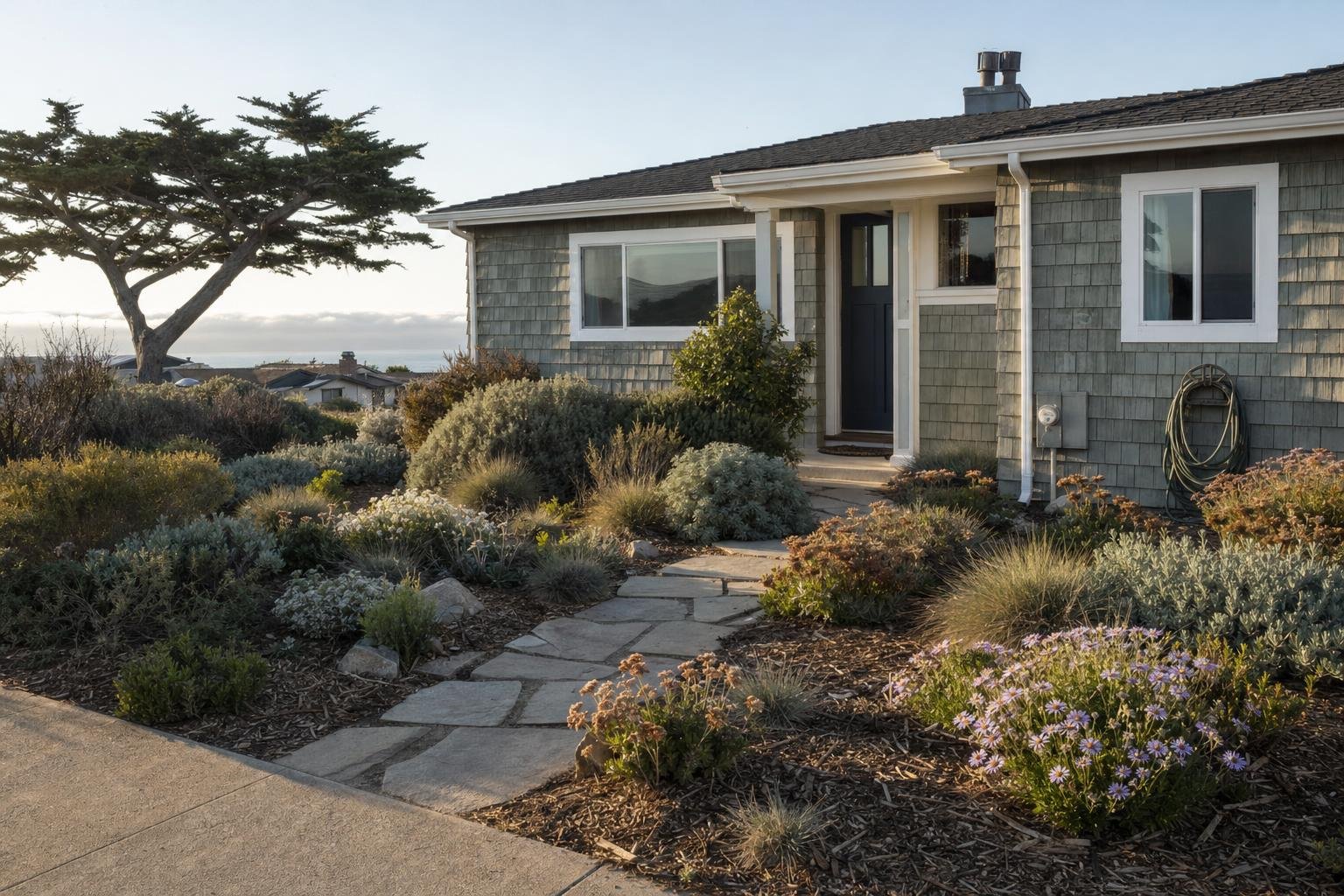
A yard a few blocks from the water is a different job than one up in Scotts Valley. Salt rides in on the afternoon wind, the fog sits on everything through June and July, and the soil is often sand that drains as fast as you can water it. Most plant lists you'll find online were written for Florida or the Carolinas, so here's what we actually plant on coastal properties from Santa Cruz down to Pacific Grove, and what we pull out.
What the coast does to a garden
Wind is the big one. A steady onshore breeze dries leaves out faster than the roots can keep up, and it carries salt that burns the edges of anything soft. You'll see it first on the side of a shrub facing the ocean, browned and stunted while the back side looks fine.
Fog cuts the other way. It keeps things cool and damp in summer, which is great for water use but rough on plants that want heat to bloom or ripen. Tomatoes, citrus, and a lot of the showy Mediterranean flowers sulk here. The soil near the beach in Capitola, Seacliff, and La Selva Beach tends to run sandy, while some of the older neighborhoods on the bluffs sit on heavier ground that holds water in winter. It's worth digging a test hole before you buy anything.
Plants that hold up near the water
Our starting point is usually plants that already grow wild on this coast. They've had a long time to sort out the wind and the salt. Monterey Bay Friendly Landscape, a program run by Ecology Action, keeps a good list for coastal terrace yards, and it lines up closely with what we use.
For screening and wind breaks, ceanothus (California lilac), manzanita, and coffeeberry are our workhorses. 'Eve Case' coffeeberry stays dense and takes both sun and shade, which matters on a narrow lot where the house shades half the yard. On an exposed spot, put these on the ocean side to take the wind for everything behind them.
Sages do well a size down, including Cleveland sage and the low sandhill types. Sticky monkeyflower, rosemary, and grevilleas handle the wind fine. Dwarf coyote brush makes a tough, low cover that doesn't care about salt.
Seaside daisy is about as coastal as it gets. Thrift, California fuchsia, rosy buckwheat, and blue fescue all work well in the gaps. California fuchsia blooms late summer into fall, when a lot of natives have gone quiet.
California yarrow, Sonoma sage, and dudleya fill in between shrubs without needing much water once they settle.
Go easy on trees. Big ones catch wind and drop limbs, and on a small lot near the bluffs you usually don't want one. Golden Monterey cypress is a smaller form that tops out around 30 feet and makes a decent wind break, as the UC Master Gardeners point out in their coastal native list.
What we take out
Iceplant is the one we get asked about most. It was planted all over the coast for decades and a lot of people assume it's native. It isn't. The California Invasive Plant Council rates it High, its most serious category, because it smothers dunes and bluffs and changes the soil underneath. Even small pieces of stem can root and come back, so when we clear it we haul all of it off rather than tilling it in.
We also see a lot of English ivy and lawns that were never going to be happy in sand and salt. A tired coastal lawn is often the best candidate for a switch to the kind of planting above, and we cover that side of things on our drought tolerant landscaping page.
Getting a coastal planting to establish
The first year or two is where most coastal plantings fail. Natives only get drought tolerant once they're rooted in. The UC Master Gardeners say to plan on about two years of regular watering before you lean on that. Drip on a timer is the easiest way to do it, and you can taper it off as the plants fill in.
Plant in fall if you can. The soil is still warm, the rain does a lot of the watering for you, and the plants have all winter to root before the wind and dry spells of spring. We wrote more about that in our post on fall planting in Santa Cruz.
Group plants by how exposed they are. The ocean-facing edge gets the toughest stuff, coyote brush, sages, and seaside daisy, and the softer plants go in behind the house or in the lee of a fence. Give them room. Clumps with some open ground between them look more natural than rows, and they handle the wind better than a single tight hedge that turns into a sail.
If you want to see these plants in person before you pick, the Santa Cruz County chapter of the California Native Plant Society runs plant sales and is a good place to start.
Frequently Asked Questions
What plants are best for salt spray on the coast?
Coyote brush, seaside daisy, coffeeberry, sages, and thrift all handle salt air well. Put the toughest ones on the side of the yard that faces the ocean.
Is iceplant bad for my yard?
It's rated a high-impact invasive in California and spreads into dunes and bluffs. We recommend replacing it with natives, and hauling off all of it, since stem pieces can regrow.
How long do coastal natives need regular watering?
Plan on about two years of steady watering while they establish. After that most of them get by on far less.
Do these plants work in Pacific Grove and Seaside too?
Yes. The same coastal conditions run around the whole bay, and we use most of these plants on jobs on both the Santa Cruz and Monterey sides.
Get a Free Estimate
We've been planting coastal yards around Monterey Bay for over 40 years, from Capitola to Pacific Grove, and we know which plants make it through a windy spring and which ones look good for one season. If you want help picking plants for your spot, give us a call at 831.254.3447 or reach out through our contact page for a free estimate.