




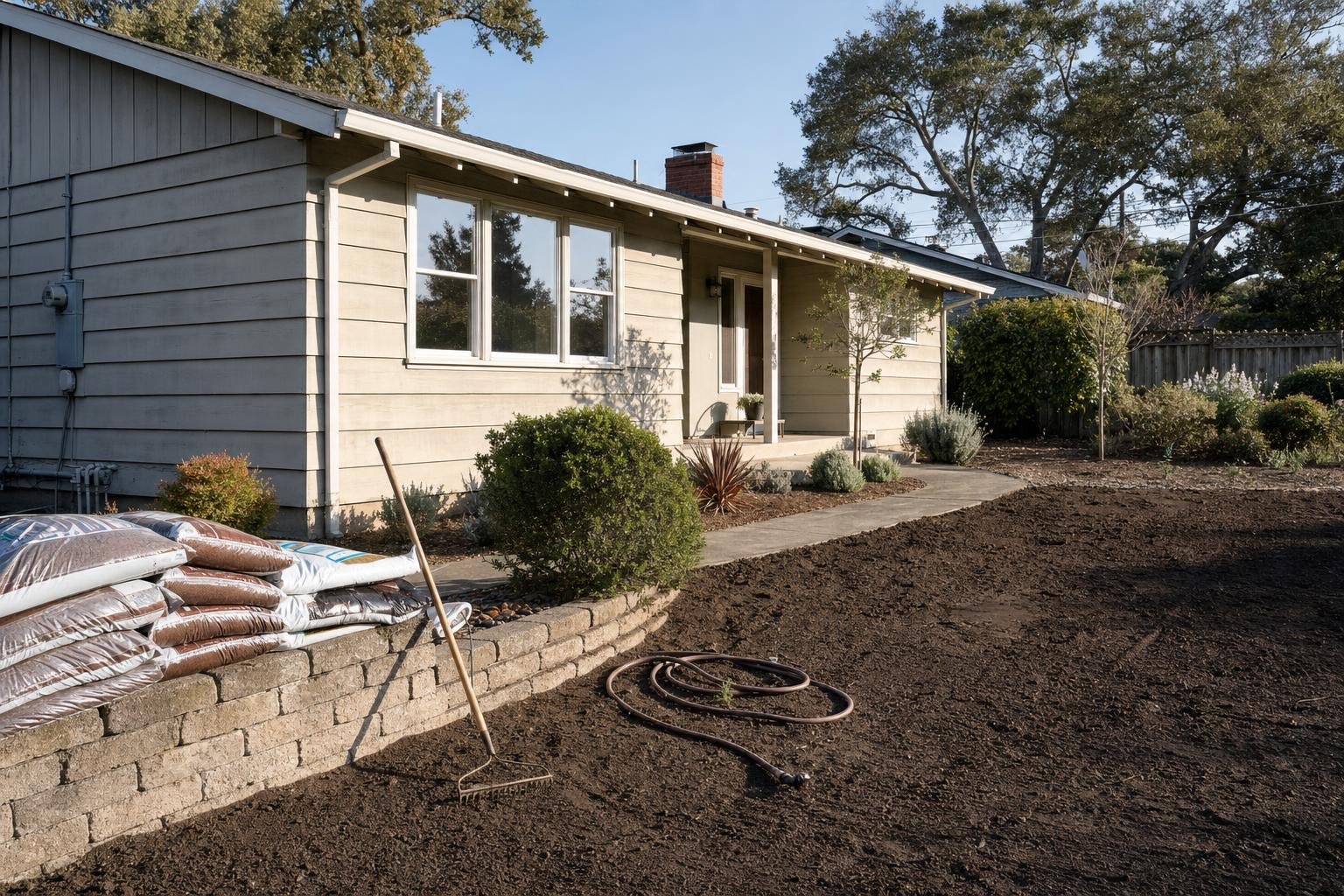
New sod only looks as good as the ground underneath it. We've put in hundreds of lawns around Santa Cruz County, and the calls we get about dead patches or thin spots almost always trace back to what happened (or didn't happen) before the sod ever arrived. Fall is a good window for sod on the coast, since the soil is still warm and the rain does some of the watering for you, and spring works too if you'd rather get ahead of summer.
Clear the ground and know your soil
Start by stripping the old lawn, weeds, and any roots down to bare dirt. Pull weeds by hand or hoe them out rather than spraying right before you plant, since dead root mats make it harder for new sod to knit in.
What's under that old lawn depends a lot on where you are. Flat ground near Watsonville or Pajaro tends to run sandy and drains fast, which means it dries out quickly and needs more organic matter to hold water. Up in Scotts Valley or the Santa Cruz Mountains, you're more likely dealing with heavy clay that compacts hard and drains slow. Shaded yards under redwoods or oaks often have acidic, needle-covered soil that's been undisturbed for years. A simple soil test kit from a garden center will tell you where your pH sits, and most lawns do best in the 6 to 7 range.
Grade, till, and amend before the sod shows up
Till the area at least 4 to 6 inches deep. This breaks up compaction and gives sod roots somewhere to go instead of sitting on top of hardpan. While you're in there, work in compost or aged manure. The sandy spots need it for water retention and the clay spots need it to open up drainage. If your soil test comes back acidic (common under redwoods), a little lime helps balance it out. If it's leaning alkaline, sulfur does the opposite job.
Grade as you go so the ground slopes gently away from the house and any patios, about 1 to 2 inches of fall per 10 feet is enough to keep water moving away from the foundation instead of pooling against it. If gophers have been a problem on the property, now is the time to lay wire mesh under the root zone, not after the sod is down. We've written more on that in our gopher control guide if that's something you're dealing with.
Timing the water before and after delivery
Sod needs to go down the same day it's delivered, so have the ground finished, raked smooth, and lightly watered before the pallets show up. Once it's in, new sod wants daily watering for the first couple of weeks to keep the roots from drying out while they knit into the soil below, per UC IPM's guidelines for irrigating new lawns. After that, you can taper down to a couple of deep waterings a week.
If you're on Soquel Creek Water District service, check their outdoor watering rules before you schedule delivery. Their rules restrict sprinklers to mornings and evenings, which lines up well with good watering practice anyway. You want to avoid watering in the heat of the day no matter what district you're in. For more on picking the right week to plant, we put together a guide to timing a new lawn in Santa Cruz that goes into the seasonal side of this in more detail.
An irrigation system that actually reaches every corner evenly makes the first month a lot easier. If your existing sprinklers were built around an old lawn shape, it's worth having someone look at coverage before the sod goes down rather than after. We cover that over on our irrigation systems page.
A quick prep checklist
- Strip old lawn and weeds down to bare dirt
- Test soil pH and note whether you're in sand, clay, or shaded duff
- Till 4 to 6 inches deep and work in amendments
- Grade away from the house and any hardscape
- Lay gopher wire first, if needed
- Rake smooth and water lightly right before delivery
- Have your irrigation ready to run daily for the first two weeks
If you'd rather have someone handle the grading and soil work and just show up for a finished lawn, that's most of what we do. More on our sod installation work is on our sod lawns page.
Frequently Asked Questions
How far ahead should I prep the yard before sod arrives?
Plan on at least a weekend for grading and tilling a typical yard, longer if you're amending heavy clay or bringing in topsoil. Sod should go down the same day it's delivered, so finish the ground first.
Do I really need a soil test for a small lawn?
It's worth the ten minutes even on a small area. Knowing whether you're acidic under the oaks or alkaline near old concrete work saves you from guessing at amendments.
Can I still water new sod if my district has restrictions?
Most districts, including Soquel Creek, restrict the hours you can run sprinklers rather than banning watering new sod outright. Morning and evening watering windows are usually enough to get sod established.
Is fall or spring better for sod in Santa Cruz County?
Both work. Fall has the advantage of warm soil and winter rain picking up some of the watering. Spring gets you a full season of root growth before next summer's heat.
Get a Free Estimate
We've been grading, amending, and laying sod around Santa Cruz County for over 40 years, and getting the ground right before anything is unrolled is where most of that work actually happens. If you want a professional look at your soil and site before you commit to a new lawn, give us a call at 831.254.3447 or reach out through our contact page for a free estimate.