




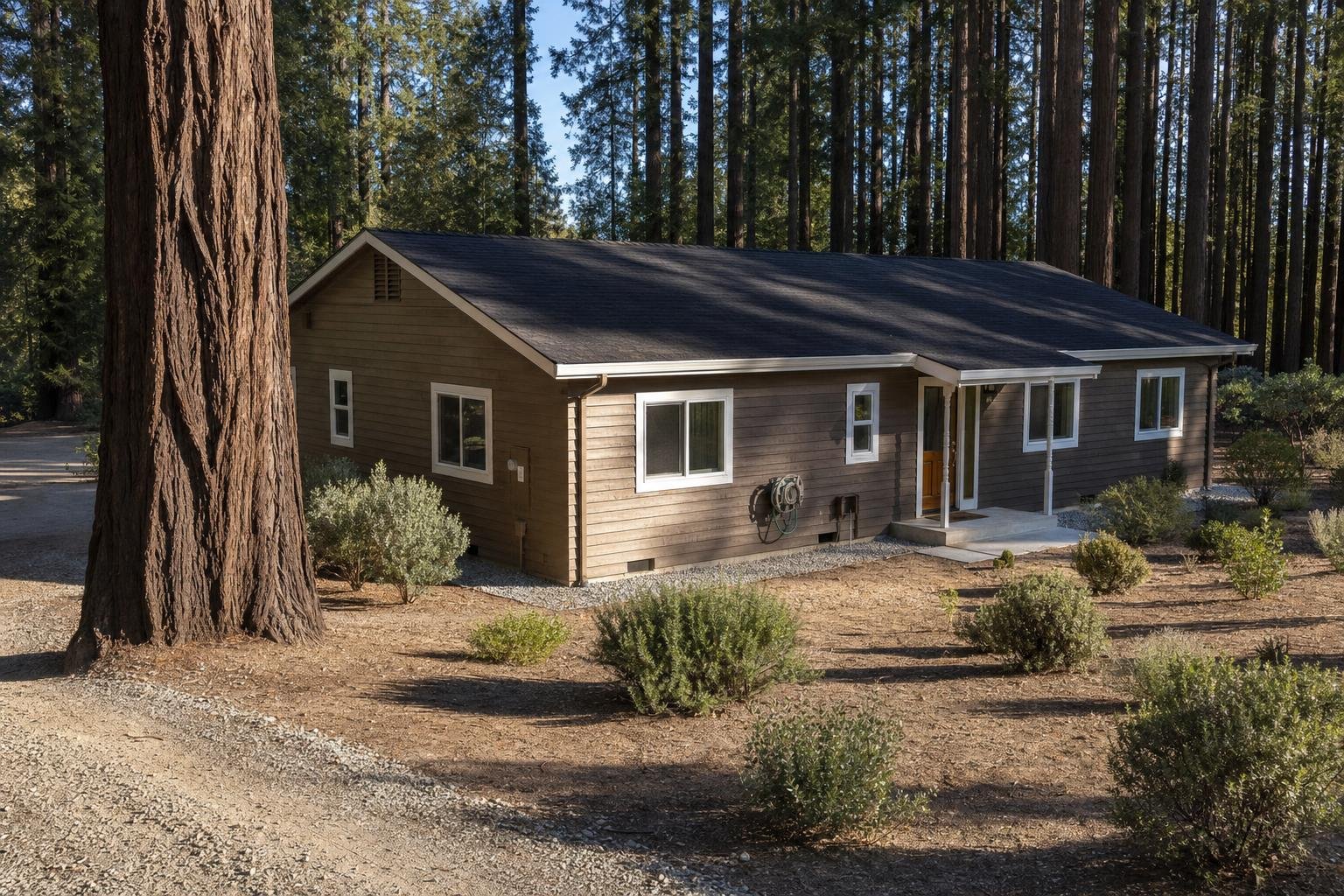
Every summer we get the same call from Boulder Creek, Ben Lomond, Felton, and Bonny Doon. A homeowner got a defensible space notice, or their insurance carrier asked for photos, and now they are standing in a yard full of coyote brush wondering where to start. We have worked these mountain lots for more than 40 years, and defensible space landscaping is not the mystery it looks like. It comes down to three zones, and most of the work is ordinary landscaping work.
What the law actually asks for
California law (Public Resources Code 4291) requires 100 feet of defensible space around a home, or out to your property line if that comes first. Most parcels in the Santa Cruz Mountains sit in a high or very high fire hazard severity zone, so this applies to nearly everyone up here. CAL FIRE splits that 100 feet into three zones, and each zone has a different job.
Worth saying up front: defensible space is about slowing a fire down and giving crews somewhere safe to stand. It is not about clear-cutting your property. A well-planted mountain yard can be more fire resistant than a bare one, because irrigated plants hold moisture and bare dirt on a slope washes out the first wet winter.
Zone 0, the first five feet
Zone 0 runs from your siding out five feet, and it is the zone that decides most outcomes. Post-fire assessments keep finding the same thing, that homes ignite from embers landing in this band far more often than from a wall of flame arriving. What we do here is straight hardscape work.
- Pull woody shrubs, junipers, and ornamental grasses out entirely. Nothing with a woody stem against the house.
- Replace bark mulch with crushed rock, decomposed granite, pavers, or flagstone. Bark catches embers and smolders.
- Keep the band clear of leaf litter, redwood duff, and needle drop. Under oaks and redwoods that means checking it several times each fall.
- Move firewood stacks, propane tanks, and stored lumber well outside the five feet.
- Rethink anything combustible attached to the house. Wood lattice, deck skirting, and stored patio cushions all count.
If you want that band to look like something instead of a gravel strip, a small hardscape detail does the work. A flagstone walk, a low stone seat wall, or a clean pea gravel border reads as intentional and carries no fuel.
Zone 1, five to thirty feet
CAL FIRE calls Zone 1 lean, clean, and green. This is the zone people usually get wrong, because clean gets read as empty. What it actually means is spacing and maintenance.
- Plant in islands, not continuous beds. Leave open gravel, path, or mown ground between groups so fire cannot run plant to plant.
- Break up the vertical ladders. A shrub sitting under a low oak limb hands fire straight into the canopy. Prune those limbs up and keep the gap open.
- Choose low-resin, high-moisture plants and keep them on drip. Toyon, coffeeberry, California fuchsia, and ceanothus in the right spot all behave well, as do lavender, rockrose, and most succulents.
- Take out the known offenders. Juniper, pampas grass, acacia, and old French broom are the ones we pull most often on mountain jobs.
- Keep it watered. A dry native is fuel. The same plant on a working drip line is not.
Dead material matters more than plant choice. A well-chosen shrub packed with dead interior wood is worse than a plain one that gets cleaned out every year.
Zone 2, thirty to a hundred feet
Zone 2 is thinning, not removal. The goal is keeping a fire on the ground and out of the canopy.
- Space tree crowns so they are not touching. On steeper ground the spacing needs to be wider, because fire climbs a slope fast.
- Mow annual grasses down and keep them down through summer.
- Remove dead limbs, downed wood, and heavy duff buildup.
- Limb up mature trees so there is clear separation between ground fuel and the lowest branches.
On steep parcels this is where defensible space and slope stability run into each other. Strip a hillside bare and you have traded a fire problem for a mudslide. The right approach on those lots is thinning while keeping deep-rooted cover, and sometimes terracing or a retaining wall to hold the grade. We go deeper on the slope side of this in our post on hillside erosion control.
Local details worth knowing
A few things specific to Santa Cruz County that come up on almost every job.
- Chipping. The Resource Conservation District runs no-cost community chipping in eligible high-risk areas. Registration has typically opened in April with chipping in early May, and material has to come from within 100 feet of a structure or ten feet of a private road. Worth planning your clearing around that window.
- Tree permits. Following the county defensible space guidelines usually does not require a permit, but heritage and other protected trees can still need one. Check with the County before taking down anything large.
- Plant lists. The Fire Safe Council of Santa Cruz County and the RCD both publish fire-resistant plant lists built for our conditions, which beats any national list.
- Access roads. Long private driveways up here need clearance too. If an engine cannot get in, nothing else you did matters much.
Frequently Asked Questions
Can I have any plants within five feet of my house?
The safe answer is no woody plants and no bark mulch in that band. A few well-watered, low-growing, non-woody plants may pass, but hardscape is the choice that always holds up.
Does defensible space mean I have to remove my trees?
Usually not. Most of the work is spacing crowns, limbing up, and clearing what sits underneath them. Healthy, well-spaced coast live oaks and redwoods can stay.
When is the best time to do this work?
Late winter through spring, before the grasses cure and before fire season gets going. That also lines up with the chipping program window.
Will this help with my homeowners insurance?
Carriers ask about it more every year, and documented defensible space is one of the things they look at. Take photos when the work is finished and keep them.
Get a Free Estimate
PGS Landscape has been working mountain properties in Boulder Creek, Ben Lomond, Felton, and Bonny Doon for more than 40 years. If you have a notice in hand, or you just want the yard in better shape before the next dry stretch, give us a call at 831.254.3447 or contact us online for a free estimate.