




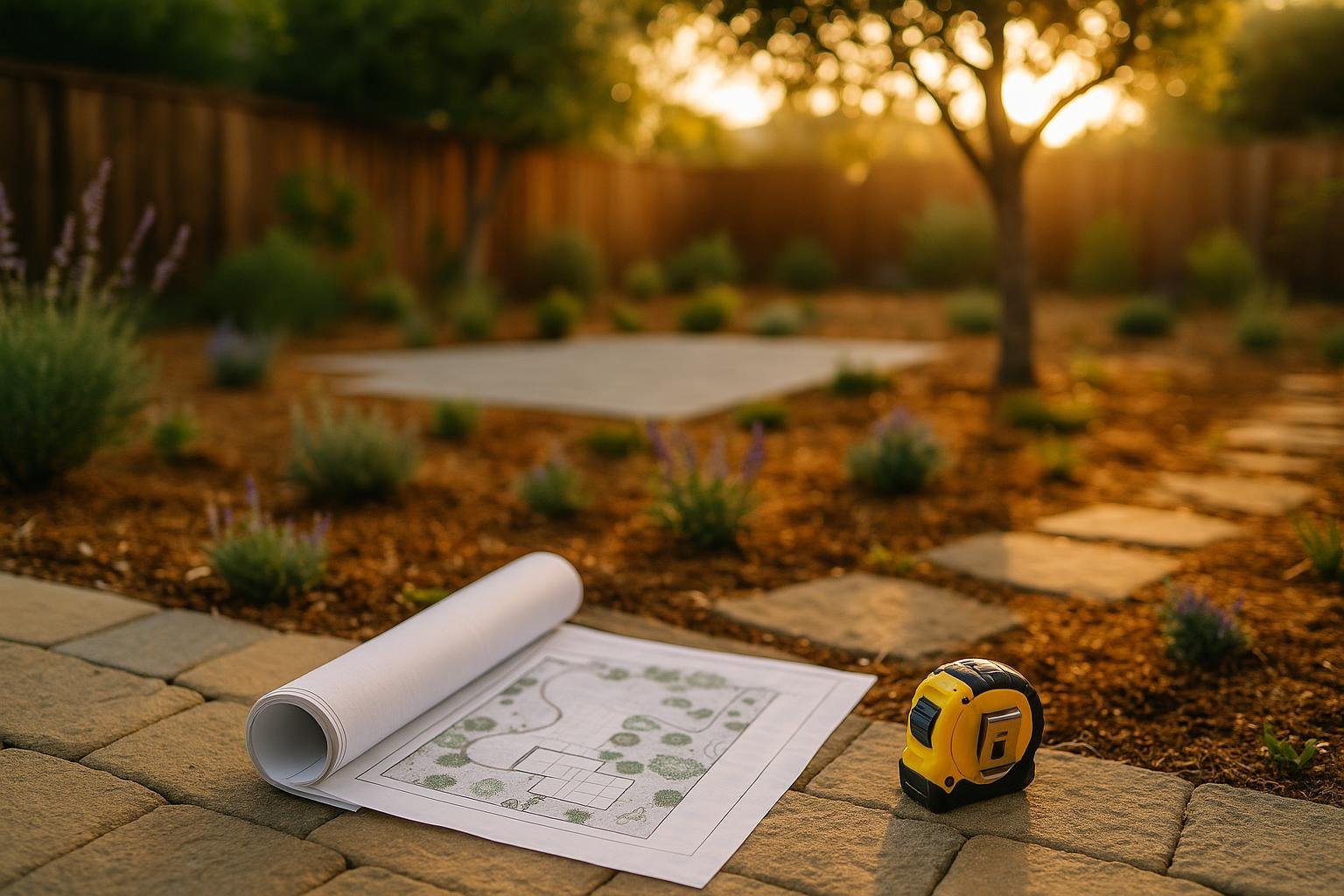
A lot of homeowners call us a little nervous. They have a yard they want to fix and a vague worry that hiring a contractor means signing something they do not fully understand. After 40 years on Santa Cruz County jobs, we can tell you the landscape design process is more straightforward than it looks, as long as you know what each step is for.
This is a plain walk through how it actually goes, from the first phone call to the day the crew rolls in.
Step one, the first phone call
The first conversation is short. Usually 10 to 15 minutes on the phone or a quick reply to your contact form. We are trying to figure out a few things. What part of the yard are we talking about. Whether you have a rough budget range in mind. Whether you are on a deadline. Whether the property has any obvious complications, like a steep slope, a septic field, or a creek setback.
We do not push for precise answers here. Most people do not know what a budget range should be for a backyard remodel. That is fine. We are mostly listening for scope and timing so we know whether to come out for a site visit.
Step two, the on-site visit
If it sounds like a fit, we come out. On-site visits are free and usually run 30 to 60 minutes. We walk the property together, ask questions, take photos, and note things you might not have thought to mention.
What we are actually looking at on the walk:
- Site access. Can a skid steer get to the back, or is everything going to be wheelbarrowed by hand. This is a huge cost driver on mountain lots and tight Live Oak streets.
- Grade and drainage. Where does water come from in a hard rain, and where does it go. Most yards in Scotts Valley, Soquel, and Aptos sit on clay that holds water.
- Soil. Sandy coastal soil, redwood-shaded loam, mountain clay, and post-fire mineral soil in Boulder Creek and Ben Lomond all need different prep.
- Sun and microclimate. Coastal fog belt versus inland sun belt is a real line in Santa Cruz County, and it changes plant choices.
- Setbacks and permits. Creek setbacks, slope thresholds, county versus city rules.
- What is staying. A redwood you do not want touched. An old patio that is still good. A view you want preserved.
By the end of the walk you should have a feel for what is possible. We will usually flag the two or three big constraints right there.
Step three, the proposal
A few business days later, you get a written proposal. For a small job (a patio refresh, a section of irrigation, a fence) this is a one or two page document with a fixed scope. For a larger remodel it is more of a phased plan: what we recommend, what each phase costs in a rough range, what we would tackle first.
We give honest range pricing and a clear list of what is in and what is out. If a number changes during the job because you decided to upgrade or because we uncovered something underground, we walk you through it before we proceed.
A lot of Santa Cruz yards do not need to be done all at once. We will tell you what to tackle first (almost always drainage and grading if those are issues), what to defer, and what would be cheaper to bundle now instead of revisiting later.
Step four, design refinement and material selection
Once you agree on direction, we get into the details. For most residential projects in Santa Cruz County, a sketch on the proposal plus a few reference photos is plenty. Bigger jobs get proper drawings.
Common things we work through here:
- Materials. Concrete pavers versus natural stone, decomposed granite versus mulched paths, sod versus drought-tolerant ground covers.
- Irrigation. Drip versus spray, smart controllers that qualify for Soquel Creek Water District or City of Santa Cruz rebates, and how to zone it for sun exposure.
- Lighting. Path lights, uplights, downlights from trees. We almost always go low voltage on residential. See our landscape lighting post for the why.
- Plant palette. Anchored to drought tolerance and deer pressure in mountain neighborhoods. Our drought tolerant plant page is a good starting point.
This step takes a week or two of back and forth. Some people decide everything in one visit. Some take a month to pick pavers. Both are fine.
Step five, permits and scheduling
If your project needs permits (retaining walls over a certain height, grading on a slope, work near a creek setback), we pull them. In Santa Cruz County this can add two to eight weeks depending on department backlog.
Once permits are in hand, we schedule the install. Peak Santa Cruz season runs spring through early fall, so for spring starts we are usually booking in late winter. Mountain jobs in Boulder Creek and Ben Lomond often want to wait until the ground dries out enough to bring equipment in.
Step six, install and walkthrough
The crew arrives and the work happens. For a typical mid-sized backyard remodel in Santa Cruz County, the install window is two to six weeks. Drainage and grading first, then hardscape (see our hardscape page for what that covers), then irrigation, then planting, then lighting, then cleanup.
You do not need to be home during the work. We send updates and photos as we go. If something unexpected comes up (a buried irrigation line, a rotten stump), we stop and call you before we keep going.
When the install is done we walk the project with you. We show you how the irrigation controller works, where the shutoffs are, and what to expect from new plantings the first growing season. We come back at the 30-day mark on most installs to check that everything is settling in.
Frequently Asked Questions
How long does the whole landscape design process take?
From first call to install start, a small project can be 2 to 4 weeks. A medium remodel is more like 6 to 12 weeks once you add design refinement and material selection. A larger phased project that needs permits can easily run 3 to 6 months before any digging happens.
Do I have to hire a separate landscape designer?
Not for most residential work in Santa Cruz County. We do the design and the install as one process. For very large or complex projects (engineered retaining walls, full grading plans, properties with creek setbacks), we sometimes bring in a licensed landscape architect or civil engineer to draw and stamp the plans.
What if I do not know what I want yet?
That is normal and totally fine. Most of our first site visits are with people who have a feeling about their yard but no firm plan. Part of our job is to ask the right questions and help you narrow it down. You do not need a Pinterest board to call us.
Get a Free Estimate
We have been guiding Santa Cruz County homeowners through this process for over 40 years, on yards ranging from small Aptos cottages to mountain properties in Boulder Creek. If you are thinking about a project and want to talk it through with no pressure, call us at 831.254.3447 or reach out through our contact page for a free estimate. You can also look at our testimonials to see how past clients felt about working with us.