




Flagstone is the patio material homeowners ask us about most after pavers. It looks right on a coastal property, it ages well, and no two patios look the same. We have installed flagstone all over Santa Cruz County, from redwood lots in Felton to sunny yards in Aptos. The quality of the install matters more than the stone you pick.
What Flagstone Actually Is
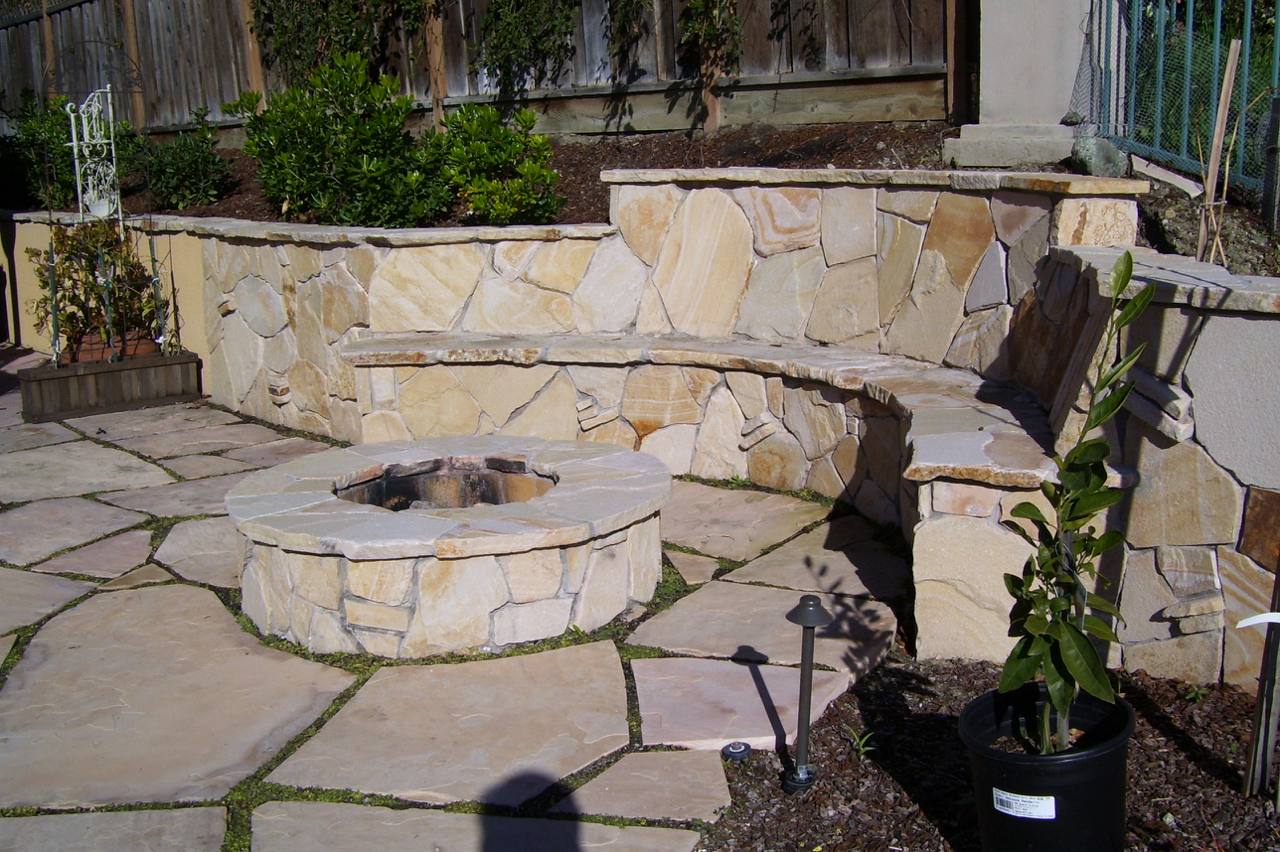
Flagstone is a general term for flat natural stone in irregular pieces. Around Santa Cruz we mostly install three types:
- Arizona flagstone. Warm reds, buffs, and rose tones. Widely available at local stone yards, plays well with most Santa Cruz gardens.
- Bluestone. Cooler blue-gray, denser, quarried on the east coast. More expensive here because of freight, but the non-slip texture helps on a shaded patio that stays damp.
- Slate and sandstone. Used less often. Slate chips under heavy furniture. Sandstone varies wildly in hardness, the source matters.
For most residential patios we recommend Arizona flagstone or quartzitic sandstone at 1.5 to 2 inches thick. Thin flagstone under 1 inch will break, especially dry-laid. Pay for the thickness, it lasts twice as long.
Dry-Laid or Mortared, Which Makes Sense Here
Both methods work, they solve different problems.
Dry-laid flagstone sits on compacted Class 2 gravel and bedding sand. Joints fill with sand or decomposed granite. It flexes with the ground, drains naturally, and individual stones can be lifted and reset if a tree root pushes one up ten years in. It runs 15 to 25 percent cheaper than mortared. Trade-off, joints wash out in heavy rain and you will top off sand or DG every year or two.
Mortared flagstone is set in mortar over a concrete slab with grouted joints. It lasts longer before serious repair, holds furniture level, and stays tight against weeds. It costs more, and if a section cracks the repair is harder than swapping a dry-laid piece.
For shaded, damp patios under redwoods or in the Santa Cruz Mountains, we usually go dry-laid. Drainage is better and resetting a heaved stone is cheap. For entertainment patios close to the house or anything with heavy furniture, mortared is usually the right call. Your site should drive the method.
Real Cost Ranges in Santa Cruz County
The honest range we see on flagstone patios here is $28 to $55 per square foot, fully installed. A few benchmarks:
- Arizona flagstone, dry-laid, easy access: $28 to $38 per square foot
- Arizona flagstone, mortared over new slab: $38 to $48 per square foot
- Bluestone, mortared: $45 to $55 per square foot, sometimes higher with premium cuts
- Material alone at local stone yards: roughly $6 to $18 per square foot by type and thickness
A typical 300 square foot flagstone patio lands between $8,400 and $16,500. National calculators like Angi quote $15 to $30 per square foot, that number is low for the Bay Area. Our labor runs higher, disposal fees are higher, and coastal sites usually need more base prep. Rough ranges, varies by site. We do not quote firm prices without walking the job.
If you are weighing this against pavers, see our breakdown on paver patio cost in Santa Cruz. Flagstone runs 30 to 60 percent higher than standard concrete pavers, and the difference is almost entirely in material and labor-to-set.
What Actually Drives the Price
Five things move the number on a flagstone bid more than anything else:
- Stone type and thickness. Bluestone is roughly double the material cost of Arizona flagstone. Thicker stones cost more but install faster and last longer.
- Pattern tightness. Tight 3/8 inch puzzle-fit joints take real skill and double the cut time versus a random pattern with 1 to 2 inch joints filled with DG.
- Site access. Flagstone is heavy, 40 to 60 pounds per square foot. Hand-carrying through a side gate in Capitola or up hillside steps in Boulder Creek adds hours fast.
- Base work. Clay soil in Scotts Valley or parts of Aptos needs deeper base and sometimes geotextile fabric. Sandy coastal lots are more forgiving.
- Drainage. If the patio pitches toward the house or the yard already floods, drainage work adds up. Catch it in design, not as a change order.
Permits, Drainage, and Local Rules
A patio under 30 inches above grade generally does not require a building permit in unincorporated Santa Cruz County. Add a wall, a cover, a gas fire feature, or a raised structure and permitting kicks in. Rules vary by jurisdiction. We check this as part of the estimate.
Drainage is the other big one. New hardscape changes how water moves on your lot. Santa Cruz County has stormwater rules for new impervious surface, and mortared flagstone counts. Dry-laid flagstone with open joints over gravel is semi-permeable, which matters on larger patios. If your site already floods, fix it before the patio. Our hardscape work often ties in here.
Maintenance, What to Expect
Flagstone is low-maintenance, not no-maintenance. What the first ten years usually look like:
- Year 1. Seal the stone after install, especially sandstone. A matte penetrating sealer repels spills and keeps the natural look. Reseal every 3 to 5 years.
- Ongoing. Sweep weekly, rinse as needed. Mild dish soap handles most stains. White vinegar works on moss and mildew under redwoods.
- Dry-laid joints. Top off sand or DG annually, or use polymeric sand and redo every 5 to 7 years.
- Mortared joints. Spot-repair hairline cracks with matching grout. Full regrout is rare before year 15.
- Damaged stones. If one cracks, swap the piece. You do not redo the patio.
Frequently Asked Questions
How long does a flagstone patio installation take?
For a typical 300 square foot patio, plan on 5 to 10 working days on site. Dry-laid is faster. Mortared over a new slab adds time for the concrete to cure.
Can flagstone be installed over an existing concrete patio?
Yes. If the slab is sound and drains well, we can mortar flagstone directly over it. One of the most cost-effective ways to upgrade a tired concrete patio without demolition fees.
Will flagstone get too hot in Santa Cruz summers?
Arizona flagstone in warm tones stays cooler than darker stone. Bluestone and slate can get hot on a south-facing patio. Under shade or coastal fog it is a non-issue.
Is flagstone slippery when wet?
Textured flagstone like Arizona or thermal-finished bluestone is not slippery. Smooth slate can be. For steps or pool surrounds we only use textured stone.
Does flagstone add value to my home?
Quality hardscape generally returns 50 to 80 percent of its cost at resale in Santa Cruz, and a well-built flagstone patio reads as a premium feature. A cracked, weed-taken patio reads as a liability. Build it once, build it right.
Get a Free Estimate
PGS Landscape has been building patios in Santa Cruz County for over 40 years. If you are thinking about a flagstone patio, call 831.254.3447 or reach out through our contact page for a free on-site estimate. We will walk the yard, talk through what makes sense for your site, and give you an honest range.