




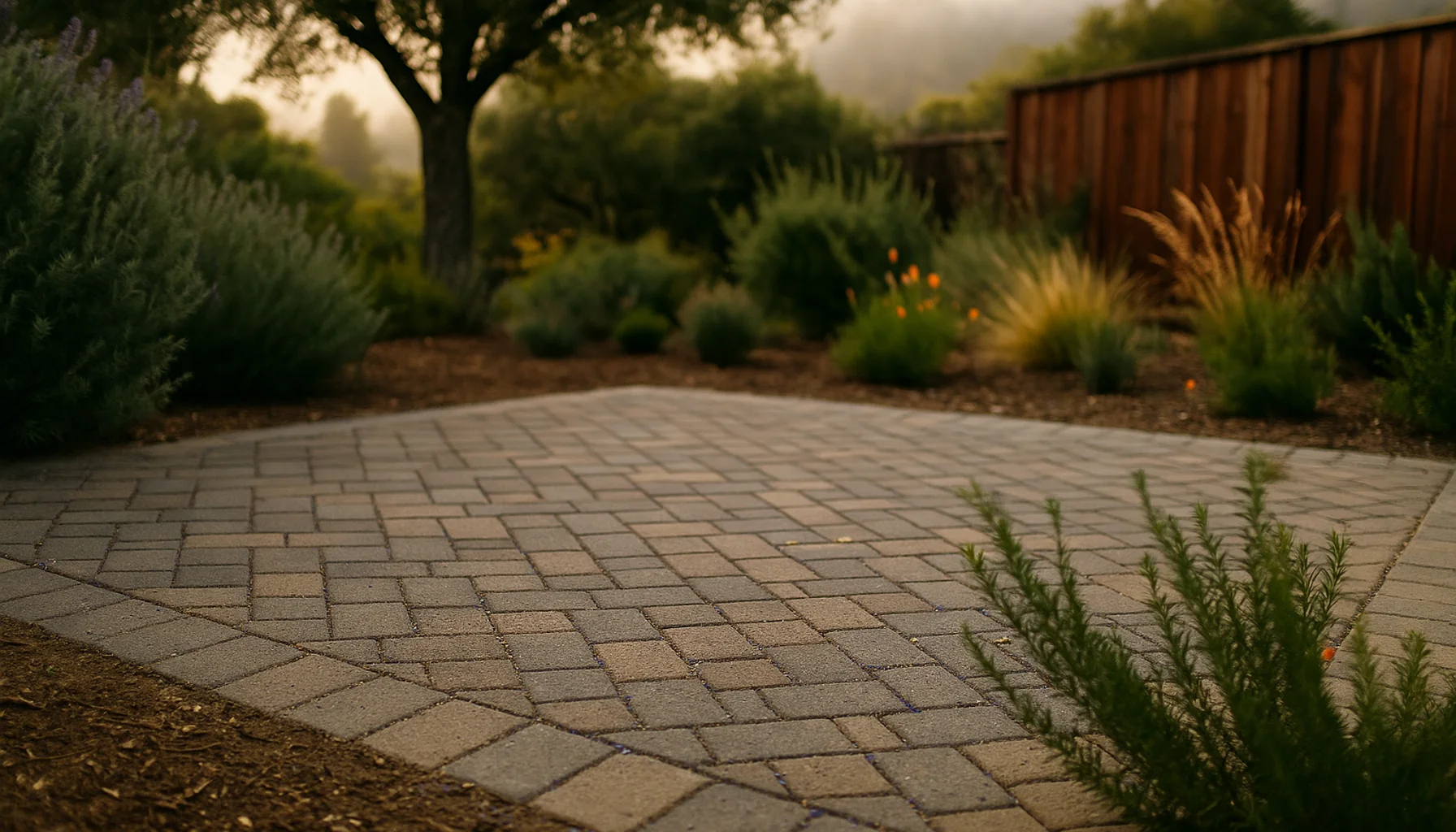
If you are pricing out a paver patio in Santa Cruz, the national calculators will tell you one thing and the bids you get back will tell you another. After 40 years of building patios around Santa Cruz County, we can tell you what is actually driving the number on your estimate, and where you can save without regretting it five winters from now.
The Honest Cost Range for Santa Cruz
Most paver patios we install in Santa Cruz County land between $22 and $42 per square foot, fully installed. That is a rough range and it varies by site. On the lower end you are looking at a flat, easy-access backyard with standard concrete pavers and no demo. On the higher end you are looking at sloped terrain, premium stone pavers, curves and borders, or access issues where we are wheelbarrowing material 100 feet from the street.
For a typical 300 square foot patio, that puts you somewhere in the $6,600 to $12,600 range. A smaller 150 square foot patio off a back door lands closer to $3,500 to $6,000.
Why the Bay Area number runs higher than the national "$12 to $24 per square foot" you see on Angi or HomeAdvisor: labor here costs more, fuel and disposal fees are higher, and coastal sites almost always need more base prep than a flat lot in Texas or Ohio.
What Drives the Price Up or Down
Five things move the needle more than anything else on a Santa Cruz paver patio:
- Base prep. A proper patio here gets 4 to 6 inches of compacted Class 2 base and an inch of bedding sand. On clay-heavy sites in Scotts Valley or parts of Aptos, we often go deeper or add geotextile fabric. Skimp on base and the patio heaves or dips within a couple of wet winters.
- Paver choice. Standard concrete pavers run about $3 to $6 per square foot for material. Premium tumbled or textured pavers are $6 to $12. Natural stone like flagstone or bluestone can push material alone to $15+ per square foot. Full disclosure, flagstone is not technically a paver, but we get asked to compare the two constantly.
- Site access. If we can back a skid-steer and a dump trailer up to the work area, the job moves fast. If we are hand-hauling pavers through a narrow side gate in Capitola or up hillside steps in Boulder Creek, labor hours climb.
- Demo and grading. Tearing out old concrete runs $2 to $5 per square foot on its own, plus disposal. Regrading for proper drainage on a sloped lot can add a day or two.
- Edges, borders, and patterns. A simple running bond with a soldier course border is efficient. Herringbone patterns, curved edges, and contrasting borders add cutting time, which adds labor.
Permits, Drainage, and Local Details
In most of Santa Cruz County, a ground-level paver patio under 30 inches off grade does not need a building permit. That said, if your patio changes drainage patterns, adds a retaining wall over 3 feet, or is part of a larger project with roofed structures, you will likely need a permit. Rules vary between the City of Santa Cruz, Capitola, Scotts Valley, and unincorporated county. When in doubt, call the local building department, or we can check for you during the walk-through.
Drainage is the piece most homeowners do not think about until the first heavy rain. We design patios with a minimum 1 to 2 percent slope away from the house, and on properties with clay soil or known runoff problems, we build in French drains, channel drains, or permeable joints. A patio that traps water against your foundation is a more expensive problem than the patio itself.
One more local note. If you are replacing a large amount of impermeable surface in Santa Cruz city limits or near creeks, stormwater regulations sometimes require permeable pavers. Those cost 15 to 25 percent more than standard pavers but they check the regulatory box and they genuinely work well here given how much rain we get in a normal winter.
How PGS Quotes a Patio
When we come out for an estimate, we look at four things. Soil and drainage conditions, access to the work area, what the patio ties into (a hardscape plan, an outdoor kitchen, existing retaining walls), and what materials fit your home and budget. Then we give you a number, itemized, so you can see what the base prep, materials, and labor each cost. No games, no padding for change orders we know are coming.
Most of our patio work ties into a broader yard plan, so if you are weighing a patio against or alongside other work, browse our patios page and our Santa Cruz landscape services for what we typically build together. A standalone patio is great. A patio that connects properly to the rest of the yard is better.
Frequently Asked Questions
How long does a paver patio take to install?
Most 300 to 500 square foot paver patios take 4 to 7 working days from demo to final sanding. Weather, site prep, and pattern complexity can stretch that.
Are pavers better than stamped concrete in Santa Cruz?
For most sites here, yes. Pavers flex with minor ground movement, they do not crack the way a concrete slab will over time, and if a section gets damaged you can pull and replace individual pavers. Stamped concrete looks great on day one but cracks are almost inevitable on our soils.
Do I need to seal my paver patio?
Not required, but we recommend sealing 30 to 60 days after install and then every 3 to 5 years. Sealing keeps joint sand in place, slows weed growth, and helps pavers resist staining. Budget about $1 to $2 per square foot for professional resealing.
Can you match a patio to an existing one?
Usually. If your original pavers are a common product still in production, we can match. If they are 15+ years old and discontinued, we look for a close complementary color and often use a contrasting border to make the new and old sections blend deliberately rather than clash.
Get a Free Estimate
PGS Landscape has been building patios across Santa Cruz County for over 40 years. If you want a straight answer on what your specific project will cost, call us at 831.254.3447 or reach out through our contact page. We will walk your site, talk through materials and layout, and send you a written estimate with the numbers broken out line by line.