




A fire pit is the cheapest way to make a backyard feel like a real outdoor room. We have built dozens around Santa Cruz County, from foggy decks in Capitola to clay-soil yards in Scotts Valley to redwood lots in the mountains. The good ones share a few things in common, and the bad ones almost always come from skipping the planning. Here is what we have learned after 40 years of doing this work locally.
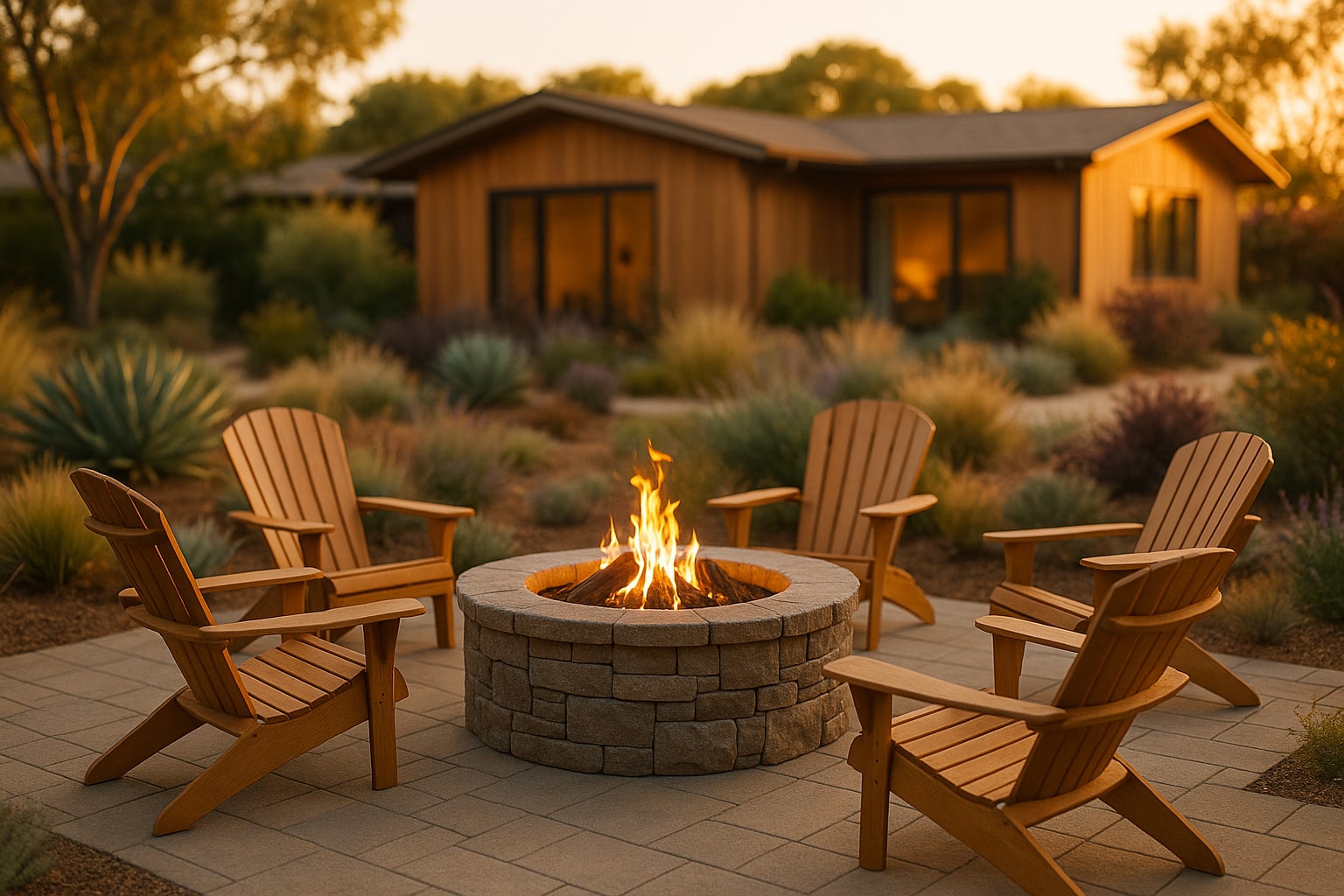
Gas or Wood, Pick This First
Everything else flows from this choice. We get this question on every fire pit job.
Wood-burning fire pits. Classic look, real smell, real crackle. Cheaper to build (no gas line). The downsides are real on the central coast. You cannot legally burn on Spare-the-Air days, which the Monterey Bay Air Resources District calls a few times a year on cold, still nights, exactly when you want a fire. Smoke drifts to neighbors fast on a tight Capitola lot. In the mountains, fire restrictions often shut wood pits down for months in dry season.
Gas fire pits (propane or natural gas). Push-button, no smoke, no embers, no Spare-the-Air problem. Natural gas is cheaper to run if your house already has a stub nearby. The trade-off is up-front cost (gas line, burner, and permit run $1,500 to $4,000 on top of the build) and a less primal feel. Lava rock or fire glass instead of logs.
For most Santa Cruz County yards, we recommend gas. The convenience wins, and you actually use it. Wood pits in Boulder Creek, Felton, or Bonny Doon make sense if you have the space and the defensible-space discipline to run them safely.
Layout Ideas That Work in Real Yards
A few we install over and over:
- Patio centerpiece. A round or square pit set into the middle of a paver or flagstone patio, with 4 to 6 chairs around it. Best for entertainment-focused yards. Plan a 7 to 9 foot diameter clear zone around the pit, more if you go wood.
- Sunken conversation pit. Drop the seating area 12 to 18 inches below the main grade with a low retaining wall around it. Coastal wind drops out of the seating area, which matters a lot in Aptos or La Selva Beach. More excavation, more cost, more wow.
- Pit-and-bench combo. A built-in seat wall on one or two sides, loose chairs on the others. Cuts furniture cost and reads as one unified piece. Pairs well with stacked stone or board-form concrete.
- Pit by a pool or hot tub. A small gas pit at the corner of a pool deck stretches the season into our cool summer evenings. Always gas here, embers and pools do not mix.
- Outdoor kitchen anchor. If you have an outdoor kitchen, the fire pit can sit at the far end of the patio so cooking and lounging stay separate. Keep at least 8 feet between the grill and the pit.
Materials That Hold Up Here
Coastal salt air, redwood drop, and wet winters all eat materials that do fine somewhere else. What we build with:
- Stacked dry-stack stone over a concrete and steel insert. Looks the most natural, ages well, easy to repair a single stone.
- Board-form or smooth concrete. Modern, clean, holds up to fog and salt. Pick a sealer rated for high-temperature exposure.
- Pavers or block with a stone or steel cap. Most cost-effective. Use the same paver as the surrounding patio for a built-in look.
- Corten steel bowls. Great for modern yards, the rust patina is the point. Lower install cost, but they get hot at the rim, watch kids and pets.
What we avoid here: manufactured stone veneer over wood framing (peels in our humidity), painted brick (chips), and any pre-fab kit that ships without a real burner pan. Some hardscape elements that look fine in Phoenix do not survive a Santa Cruz winter.
The Rules You Need to Know
This is the boring part that keeps you out of trouble.
- Defensible space. CalFire rules apply to any wood pit in a State Responsibility Area, which covers most of the Santa Cruz Mountains and parts of Monterey County. Clear a 10 foot radius of vegetation, 25 feet to a structure, screen the pit, and never use it on red-flag days.
- City of Santa Cruz. Open wood fires are restricted, but contained recreational fires in an approved fire pit are allowed when air quality permits. Check the MBARD burn-day status before lighting.
- Air district. Monterey Bay Air Resources District (MBARD) calls Spare-the-Air days a few times a winter. Wood burning is prohibited on those days county-wide. Gas pits are not affected.
- HOAs and rentals. Many newer Aptos and Scotts Valley HOAs ban wood pits outright. Coastal short-term rentals often require gas-only and a fire blanket on site.
- Permits. A permanent gas line tied to the house gas system needs a plumbing permit and an inspection. Propane tank pits do not. A pit over 30 inches above grade or attached to a covered structure can trigger building permits. We handle this on every gas job.
What It Costs
Rough ranges, varies by site, every job is a little different.
- Pre-fab gas fire bowl, drop-in: $1,500 to $3,500 for the unit, $500 to $1,500 to set on a prepared base
- Custom gas pit, pavers or stone, no seat wall: $3,500 to $7,000 fully installed
- Custom gas pit with seat wall and patio integration: $7,000 to $15,000
- Sunken conversation pit with retaining walls: $12,000 to $25,000
- Wood pit, basic stacked-stone build: $1,800 to $4,500
We do not quote firm numbers without seeing the yard. Soil, access, and gas-stub distance move these ranges fast. If you want it tied into an existing hardscape project, the bundled cost is usually 10 to 15 percent less than building it as a separate phase.
Frequently Asked Questions
Can I put a fire pit on my wood deck?
Only if the manufacturer rates the pit for deck use and you put a heat shield underneath. We generally talk people out of it. A small gas bowl on a stone-tiled section of deck is the safest version.
How far does a fire pit need to be from my house?
The general rule is 10 feet from any structure or overhang for wood, 6 feet for an enclosed gas unit. Local codes can be stricter, especially in mountain zones. Always check before pouring concrete.
Will a fire pit attract bugs or smoke up my yard?
Wood smoke is a bug repellent, which is one reason people like wood pits. Smoke drift is the bigger issue on a small lot. Gas pits produce neither smoke nor much heat-radius mosquito effect, but they also do not repel bugs.
Do I need a permit for a gas fire pit?
Yes if it is plumbed into your home gas line. No if it runs off a portable propane tank tucked into a built-in cabinet. We pull the permit when one is needed and walk you through the inspection.
What is the best base for a fire pit on clay soil?
A 6 inch compacted gravel base over geotextile fabric, then a 4 inch reinforced concrete slab if you are going custom. Skipping the gravel on Scotts Valley clay is how pits crack in the first wet winter.
Get a Free Estimate
PGS Landscape has been building patios and outdoor living areas in Santa Cruz County for over 40 years. If a fire pit is on your list this year, call 831.254.3447 or reach out through our contact page for a free on-site estimate. We will walk the yard, talk through gas vs. wood for your specific lot, and give you an honest range.