




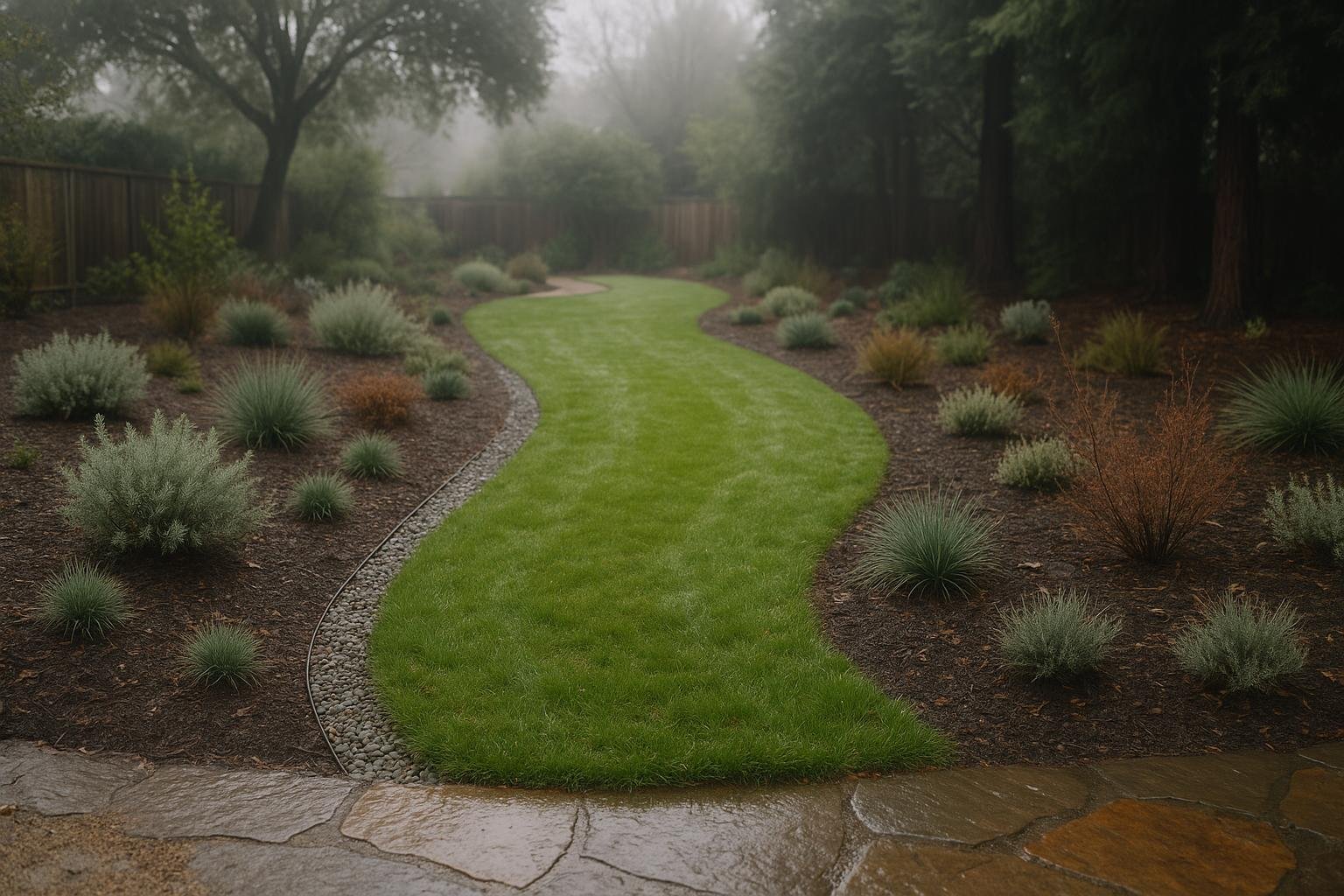
If you live in Santa Cruz County, you have seen what a few back-to-back atmospheric rivers can do to a yard. Water pooling against the foundation. A soggy patch that never dries out. A retaining wall that suddenly looks tired. We have been fixing these problems for 40 years, and the answer is almost never one magic fix. It is usually two or three small changes that work together.
Why Santa Cruz Yards Flood More Than People Expect
Our soils are heavy. Anything from Scotts Valley up into the mountains tends to be clay rich, which means water sits on top instead of soaking in. Down toward the coast in Live Oak and Capitola you get sandier ground, but those lots are flatter, so water has nowhere to go. Aptos and Soquel hillsides shed runoff fast, which is great until the bottom of the hill is your patio.
A normal Santa Cruz winter is not gentle drizzle. It is two or three soaking weeks, then another atmospheric river dumps four inches in 36 hours. Most older yards were graded for a drier climate. They cannot keep up.
Start With Grading, Always
Before anyone digs a drain, we look at where the water is coming from and where it wants to go. The cheapest, most durable fix is almost always regrading. If the ground slopes toward the house, no drainage product on the market will save you long term.
Industry rule of thumb is a minimum 2 percent slope away from the foundation for the first 10 feet. We have walked plenty of yards where regrading and a couple of well-placed downspout extensions solved most of the problem.
French Drains, When They Are the Right Answer
A french drain is a gravel filled trench with a perforated pipe wrapped in filter fabric, designed to collect groundwater and move it somewhere safer. They are the workhorse of yard drainage in our area, but they are not always the right tool.
Where they shine in Santa Cruz County:
- A persistently wet area in the middle of a lawn that takes weeks to dry out
- Along the uphill side of a foundation when seasonal seepage shows up after big storms
- Behind a retaining wall, where they are pretty much mandatory to keep hydrostatic pressure from blowing the wall over
- At the toe of a slope where water sheets across a patio or driveway
Where they are a waste of money:
- A flat lot with no outlet (water collects but has nowhere to go)
- A small puddle that is really a grading or downspout issue
A french drain needs a daylight outlet or a dry well to discharge into. If you cannot give the water a place to leave, you are just building an underground bathtub.
Most residential french drains in our area use 4 inch perforated pipe in a trench 12 to 18 inches deep, surrounded by washed drain rock and wrapped in non woven filter fabric. Skipping the filter fabric is the single most common reason a french drain fails. Fines wash in, the gravel clogs, the pipe stops draining.
Swales and Berms, the Quiet Fix Most Yards Need
A swale is a shallow, vegetated channel that moves surface water across a yard without anyone noticing it is there. Pair it with a berm on the downhill side and you have a feature that captures runoff, slows it down, and either soaks it in or shuttles it to a safer spot.
We use swales constantly on sloped lots in Aptos, Soquel, and the mountain communities where letting water race straight downhill causes erosion. In drought tolerant designs, a swale can double as a passive irrigation feature, sending winter rain straight to the roots of new plantings.
Swales work because they are slow. The water spreads out, the soil and roots get a chance to drink, and what is left moves gently to its outlet. They look like landscaping, not infrastructure, which is why we like them.
Dry Wells, Downspouts, and the Hardscape Trap
When there is nowhere obvious to send the water, a dry well can be the answer. It is essentially a large gravel pit, sometimes lined with a perforated chamber, that holds water until the surrounding soil absorbs it. They work best where the underlying soil actually percolates. On sandy Capitola or Live Oak lots, they can be excellent. On heavy Scotts Valley clay, they are slow at best. We always do a simple perc test before committing.
The fastest drainage win on most properties is downspouts. A 1500 square foot roof generates close to 1000 gallons in a single inch of rain. If that water is dumping at the base of the foundation, no amount of drainage further out in the yard will rescue it. We almost always extend downspouts at least 6 to 10 feet from the house, ideally tying them into a buried pipe that runs to a real outlet.
The other trap is patios installed without thinking about drainage. A solid pad with no slope will pool every storm. When we install patios or work on broader hardscape projects, drainage is baked in from day one. Permeable surfaces, edge drains, and proper sub-base prep all matter more than most people realize. Retrofitting a fix later is always more expensive than building it in up front.
Frequently Asked Questions
Do I need a permit for yard drainage in Santa Cruz County?
For most residential surface drainage, swales, french drains, and downspout extensions, no permit is required. If your project ties into a public storm drain, involves a retaining wall over 4 feet, or affects a creek or riparian zone, you will likely need a permit from the County or your city. We handle the permit conversation up front so there are no surprises.
How long does a french drain last?
A properly installed french drain with filter fabric, clean drain rock, and a real outlet should last 20 to 30 years. The number one killer is skipping the fabric.
Will a drainage system fix a wet crawl space?
Often yes, but not always. If groundwater is coming up from underneath, you may need an interior sump system as well. We start with the exterior fixes because they are cheaper and more permanent.
Can I install a french drain myself?
The trench part is doable. Getting the slope right, wrapping the fabric correctly, and finding a legal outlet is where DIY jobs tend to go sideways. We have repaired more than a few homeowner drains that worked for one winter and then failed.
Get a Free Estimate
PGS Landscape has been solving drainage problems across Santa Cruz County for 40 years. If your yard is telling you something is off, walking it once before the next storm is the smartest thing you can do. Call us at 831.254.3447 or reach out through our contact page and we will come take a look.